1) Citrus industry
柑橘工业
2) orange
柑橘
1.
Non-Destructive Testing for Quality Parameters in Orange by NIR;
柑橘品质的近红外光谱无损检测
2.
Electronic nose monitoring the oranges stored for different times;
不同储藏时间柑橘电子鼻检测研究
3.
Rapid of detection prochloraz and its degradation products in orange by gas chromatography;
柑橘上施保克及其降解产物的GC快速检测
3) citrus
柑橘
1.
The biological characteristics of pectinesterase in citrus;
柑橘皮中果胶酯酶的生物学特性研究
2.
Study on residue dynamics of famoxadone in citrus;
噁唑菌酮在柑橘上的残留动态研究
3.
Researching of characters of citrus accumulation heavy metal to soil in the Three Gorges Reservoir Region;
三峡库区柑橘对土壤重金属吸收富集特征研究
4) citrus fruit
柑橘
1.
Partial least square (PLS) investigation on sugar content, valid acidity and sugar-acid ratio of citrus fruit based on digital image processing;
基于数字图像处理的柑橘糖度、酸度和糖酸比PLS研究
2.
Determination of sugar content of citrus fruit based on computer vision;
基于计算机视觉的柑橘糖度检测
3.
The main material in this drink is citrus fruit that is rich in carotenoids.
本研究以富含类胡萝卜素的柑橘为基料,配以传统的明目佳品——决明子,引入微胶囊化叶黄素,并以蔗糖、柠檬酸、CMC-Na、黄原胶等为辅料,制成新型健视饮料。
5) oranges
柑橘
1.
The strategy analysis and development method of Yongzhou oranges industial clusters;
永州柑橘产业集群战略分析与发展路径
2.
Using the egg protein as a standard protein and WHO/FAO reference model of essential amino acid (EAA) as an appraisal criterion ,the nutritional value of the flesh of fruit proteins in the nine oranges were evaluated by fuzzy pattern recognition and ratio coefficient of amino acid(AA).
应用模糊识别法和氨基酸比值系数法,分别以鸡蛋蛋白质为标准蛋白,以WHO/FAO氨基酸参考模式为评价标准,对9种柑橘果肉(鲜品)蛋白质营养价值进行了全面评价。
6) Citrus sinensis
柑橘
1.
Effects of mowing, AM fungal inoculation and phosphorus application on growth of Citrus sinensis and Stylosanthes gracilis in a rhizobox;
刈割、AM真菌和施磷对根箱栽培中柑橘和柱花草生长的影响
2.
Selection of Cold Tolerant Somaclonal Variant from Citrus sinensis cv. Jincheng and Genetic Stability Evaluation of Its Cold Tolerance;
柑橘抗寒细胞变异体的获得及其抗性遗传稳定性的研究
3.
Fengjiewancheng (FJWC, Citrus sinensis Osbeck) is a novel late-ripening navel orange mutant of Fengjie72-1 navel orang(FJ72-1).
这两个品种一起将构成一个很好的柑橘成熟机理研究体系。
参考词条
补充资料:工业炉:工业炉排烟系统
利用烟囱或机械装置将工业炉炉膛内的烟气排出炉外的系统。保证排烟通畅是工业炉正常使用的重要条件﹐排烟不通畅时﹐炉膛压力昇高﹐从炉膛四周的缝隙会逸出大量烟气而增加炉子的热损失﹐影响炉内气流的均匀分布﹐降低炉温均匀性﹐恶化操作环境。
排烟系统是由產生抽力的排烟装置和排送烟气的烟道所组成。常用的排烟装置有烟囱(图1 烟囱排烟装置 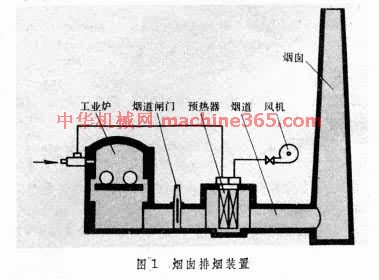 )﹑引风机或喷射管(图2 机械排烟装置
 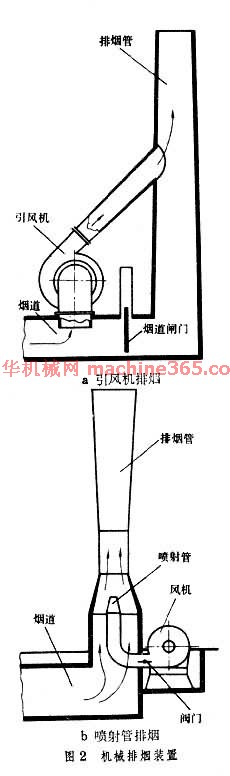 )等。
)等。
烟囱排烟是靠流入烟囱内热烟气密度小於烟囱外空气密度所產生的浮力﹐以克服烟道的阻力。利用引风机也可将烟气排出﹐或在排烟系统中某一部位装设一个喷射管﹐用高速喷射气体所產生的负压排出烟气。烟囱排烟不消耗动力﹐排烟温度不受限制。当排烟阻力很大而工业炉又间断运行时﹐可用引风机或喷射管排烟。喷射管适用於排除高温烟气﹔引风机适用於排除低温烟气。
烟囱分为砖砌烟囱﹑混凝土烟囱和钢板烟囱。烟道有地下烟道和架空烟道两种。地下烟道多用砖砌﹐架空烟道宜採用衬有耐火材料的钢板製成。
为了减少烟气对环境的污染﹐或因节能需要而在烟道内设置预热器时﹐都需要儘量提高烟囱高度并增加烟囱出口处的烟气流速﹐使之大於当地最大风速或至少不低於3米/秒﹐以避免烟气中的有害气体和烟尘向地面扩散。当烟囱高度达50米以上时﹐烟囱顶部的风速为地面处风速的数倍。烟气到达地面时已在离烟囱很远的地方﹐这时烟气已在逐步扩散中稀释到无害的程度。对燃烧固体燃料的工业炉﹐在排烟系统中还要设置各种形式的除尘器﹐使烟气排出时的含尘浓度降低到200微克/米3以下。
说明:补充资料仅用于学习参考,请勿用于其它任何用途。