2) casting
铸件
1.
In-situ Observation and Analysis on the Formation of the Precipitating Gas Hole during Casting;
铸(件)内析出性气孔形成及演化的直接观察与分析
2.
Improvement of black deposition process on sand-castings;
翻砂铸(件)黑色镀层工艺改进
3.
Parallel Surface Design of Casting and Mould Based on Reverse Engineering;
铸(件)曲面及其模型曲面逆向工程并行设计技术
3) castings
铸件
1.
Effect of traveling magnetic field on mold-filling capacities for E model castings of aluminum alloys;
移动磁场对铝合金E型铸(件)充型能力的影响
2.
Gating System of Aluminum Alloy Castings in Lost Foam Casting;
消失模铸造铝合金铸(件)浇注系统的试验研究
3.
The Pouring Process for Cylinder Block Castings of Automobile Engines;
车用发动机气缸体类铸(件)的浇注工艺
4) cast
铸件
1.
Technical process of the expandable pattern casting and casting quality control;
干砂消失模铸造工艺过程及铸(件)质量控制
2.
It is very important of resin-sand technology applied in casting for increasing the quality of the cast.
铸(件)生产中树脂砂工艺对于提高产品质量有着重要意义。
3.
Software PRO/E was used to create 3D model of the casts,and corresponding foundry simulation software MAGMA was used to simulate the condition of mold filling of the casts as well as the temperature field,flow field,and stress field of solidification process of the casts.
使用PRO/E软件完成对铸(件)的实体造型,利用相应的铸造模拟软件MAGMAsoft对铸(件)充型状态、凝固过程的温度场、流场和应力场进行模拟。
8) microcastings
微铸件
1.
By means of micro-precision casting processes based on permanent moulds,plate microcastings at micron sizes were prepared.
微铸(件)性能的优劣是决定其工业应用的重要技术指标。
9) casting defect
铸件缺陷
1.
In order to establish the relationship between iron casting defects and clay mould sand properties used to provide in time forecast information of casting quality, a mould sand quality control system software based on C/S model was proposed.
为了构建型砂性能与铸(件)缺陷之间的关系,用以及时提供铸(件)预测信息,提出了一种基于C/S结构的型砂质量管理系统软件。
2.
From the angle of systematic analysis the casting defects are regarded as systematic faults and are diagnosed and forecasted by the fault tree analysis (FTA) method.
从系统分析角度,将铸(件)视为系统故障,进行铸(件)缺陷预报和诊断的FTA分析。
3.
Based on these, from the angle of systematical analysis, casting defects were regarede as systematical faults, diagnosed and forecasted by the method of microcomputer aided analysis in fault trees.
在开发微机辅助失效树分析软件的基础上,从系统分析角度,将液压件铸(件)缺陷视为系统故障,进行铸(件)缺陷的预报和诊断。
10) ZL205A castings
ZL205A铸件
补充资料:应用修补机修复铸钢件拉伸模、轧辊的实例
【摘要】:介绍铸造缺陷修补机的应用以及试验试棒修复结论。使用这种修复技术修复不同材质的产品,品质可以达到满意的效果。
关键词:铸造缺陷修补机;冶金结合;拉伸膜;轧辊
1、 验鉴定修复效果
(1)加工1根ZG270-500,30mm×200mm试棒,在试棒表面钻若干个Ф3mm—7mm孔眼,取Q235-A,Ф0.5 mm丝和Q345,0.2mm片作为补材,对制备的试棒使用修补机焊补平并磨光。宏观检验补材处色泽是否相同,修补处与母材硬度HB分别为152—163和172—180。
(2)在试棒修补处,横向切片做金相分析,见图1,图示左边的母材组织为珠光体+铁素体。热熔区机体组织未改变,母材与补材为冶金结合,结合处较致密,未见明显改变。经过对试棒的宏观与微观分析验证,确认铸造缺陷修补机修复品质达到技术要求。
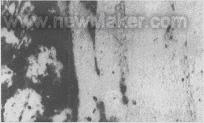
图1试样母材与补材熔焊处的组织
2 修复拉伸模实例
图2是某厂为西飞公司生产的拉伸模,ZG310—570,质量3.75t,共2件。加工后在表面粗糙度要求Ra为0.8,出现铸造缩松及多处裂纹。采用电焊对该面缺陷清除焊补、修磨,但仍存在着咬边及小点状、细条状缺陷,影响该面的粗糙程度。

图2拉伸模简图
为了确保该面的粗糙度符合图纸,保证使用性能,使用修补机进行修理。取Ф0.5mm铬镍丝和Q345,厚0.2mm片焊补,修磨抛光。后经西飞质检部精测检验合格,符合用户对该模具的完全达到品质要求。
3修复轧机轧辊实例
轧辊材质为16Mn,堆焊CrNi合金,质量2.16 t,要求辊力硬度HRC为50±3,Ф(500±0.1)mm,表面粗糙度Ra为0.8。按照轧辊的硬度和粗糙度要求,在辊身有夹渣、片状擦伤、机加工挖刀缺陷处,使用修补机处理9件,补材用Ф0.5mm铬镍丝和Q345.厚0.2mm片焊补,抛光。按A检产品3方联合检验,修复后的轧辊,硬度和粗糙度完全达到要求。
4结论
(1)用铸造缺陷修复机做试验棒的分析检验和处理几项不同材质产品的缺陷、损伤修复实例证明,该项修补技术,打破了传统的修复方法,解决了缺陷处理中的难题。
(2)该机技术含量高,且修补费用低,修复产品品质可靠。
(3)该修补机适用于对表面光洁度、精密度高的钢铁产品所存在的微小孔眼、条状缺陷以及擦伤、碰伤、加工挖刀等缺陷的修复。
说明:补充资料仅用于学习参考,请勿用于其它任何用途。
参考词条