1) alpine animal
高山动物
2) alpine animals
高山动物
3) high-mountain
高山
1.
The acidity characteristics and acidification buffering capacity of total suspended particles(TSP) collected respectively in a high-mountain area and an urban area of Fujian Province during the spring of 2003 were analyzed.
利用福建九仙山和福州市两地监测的TSP资料,对高山、重点城市的TSP酸碱特性和酸化缓冲能力进行分析研究。
2.
The acidity characteristics and acidification buffering capacity of total suspended particles (TSP) collected respectively in a high-mountainous area and an urban area of Fujian Province during Spring of 2003 were analyzed.
本文利用福建九仙山和福州市两地监测的TSP资料,对高山、重点城市的TSP酸碱特性和酸化缓冲能力进行分析研究。
4) high mountain
高山
1.
Application of metal-structure house in high mountain telecommunication microwave station;
金属结构机房在高山站的应用
2.
Television towers on high mountain was a kind of representative structure of tower mast structure.
对5座高山电视塔在自然环境下金属腐蚀与防护进行了调查和分析研究,寻求其规律性,以便在今后建设中有针对性地改进抗蚀措施,提高并延长其结构使用寿命,更好地为广播电视宣传服务。
5) high mountains
高山
1.
25BZ]Some experience in obtaining low grounding resistance in weathered rocky soil on high mountains is concluded through the design and construction practice of cutting down grounding resistance in lightning protection project of the Yaoshan Base Station, which is at an elevation of 713m, of Guilin TV Launching pad and China Mobil Co.
通过对桂林电视发射台和中国移动桂林分公司尧山基站(海拨高度713m)的防雷接地降阻工程的设计和施工实践,探索出在高山地段风化多岩石土壤获得低接地电阻的一些经验,对类似的高山防雷接地装置设计和施工有一定实用价值。
2.
This paper discusses the reason of more water (precipitation, run-off, glacier) in high mountains than in low lands.
根据高山上云、雾、雨、雪、径流等水资源丰富现象,分析了高山冰川、植被、地形等与汽-水作用关系,提出高山增水效应概念和高山区水资源开发与保护的新思路。
6) mountain
高山
1.
Introduction Trial of Cherry Tomato Cultivars in the Mountains;
高山樱桃番茄品种引进试验
2.
And it is suitable for developing autum vegetables in the mountains where the summer is cooler.
三峡坝区自然条件优越,局部小气候多样,适应于各种蔬菜的生长发育,特别是其河谷地带具有显著的“冬暖”特点,而高山、半高山地带则具有“夏凉伙早春迟”的特点,可分别发展春秋淡季蔬菜生产。
7) alp
高山
8) edelweiss
高山
9) Alpine and sub-alpine meadow
高山亚高山草甸
10) alpine meadow
高山草甸
1.
Continuous field experiment was carried out on alpine meadow along different elevation gradient in Qilian Mountains during the growing season of 2004 using a soil respiration chamber(Li-6400-09) connected to a portable photosynthesis system(Li-6400).
采用Li-6400便携式光合作用测量系统连接Li-6400-09土壤呼吸室,在2004年生长季节对祁连山高山草甸土壤CO2通量沿海拔梯度进行了野外定位试验,统计分析了水热因子及根系生物量对高山草甸土壤CO2通量特征的可能影响。
2.
),which is covered with alpine meadow,located in the middle reaches of the upper Heihe River,one of the long inland river in Northwest China.
2005年9月—2006年9月,具有较高代表性的3个山坡径流场均没有观测到产流量,结合蒸散发观测和野外调查,发现夏季高山草甸具有明显的地表径流拦蓄和水源涵养作用。
3.
The results showed that in 0-10 cm soil layer,the biomass,length density,surface area density,and volume density of living fine roots were all decreased in the order of evergreen broadleaf forest<dwarf forest<coniferous forest<alpine meadows,with significant differences(P<0.
结果表明:0~10 cm土壤活细根生物量、活细根根长密度、活细根表面积密度、活细根体积密度均是常绿阔叶林<矮林<针叶林<高山草甸,各群落间呈现极显著差异(P<0。
补充资料:小羊驼-高山动物
 小羊驼是生活在南美洲的无峰骆驼。在它有家庭中还有无峰驼和大羊驼。加人曾一度饲养过这两种动物,获取它们的毛和肉,靠它们来搬运重物。
但是,小羊驼是不易被驯服的。它们生活在安第斯山脉高达3650_4800米的地方。在这样的高处,天气寒冷,狂风呼啸,氧气也要比海拔低的地方稀薄得多。
小羊驼之所以能够在这种条件下生存下来,是因为它身上长有厚厚的毛,也因为它们的血液不同于其他动物----其中有更多的携带氧气的红细胞。正因为如此,它们能更好地利用稀薄的氧气。
白天,它们在高山草地上吃草;晚上,到更高的地方去睡觉。
不羊驼是雄性成群或整个家族成群一起生活。它们向前伸着脖子,在休息地和进食地之间走动。它们能够迅速逃离敌人的追杀。
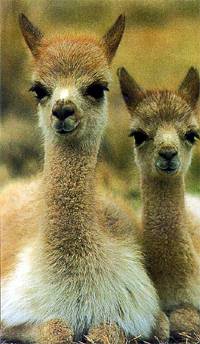
小羊驼同无峰驼和大羊驼有亲缘关系,它们都只有南美洲才有。无峰驼是其中最大的,而小羊驼是最小的。
每年,成群的小羊驼被赶到一块儿剪毛。据说,它们的毛是所有动物中最好和最轻的。30年前,它们几乎绝种。今天,它们受到全面的保护,数量正日益增多。
说明:补充资料仅用于学习参考,请勿用于其它任何用途。
参考词条