2) Taosi culture

陶寺文化
1.
The source of the dragon relics was Taosi culture.
二里头文化“龙”遗存的直接源头可能是在陶寺文化中,但“龙”遗存的社会地位在二里头文化时期下降了,这可能反映了“龙”意识观念的逐渐淡薄。
2.
Taosi culture was one of the prehistory culture in the middle area of Yellow river, between the forepart of Longshan period and Erlitou culture, and took on very important effect in the course of Culture, especially Taosi site in which took on character of early capital.
陶寺文化是黄河中游地区的史前文化之一,其年代处于龙山时代早期与二里头文化之间,在文明进程中具有承前启后、继往开来的作用,尤其是陶寺遗址明显具有早期都邑的性质。
3.
The recent archaeological discoveries indicate that the Erlitou culture was in the period of mature civilization,and the Taosi culture and the Liangzhu culture were in the elementary phase of civilization.
最新的考古发现表明:二里头文化已经是较成熟文明,而陶寺文化与良渚文化则为文明的初级形态。
3) Siwa Culture
寺洼文化
5) The Tea Culture of Temple
寺庙茶文化
1.
The Tea Culture of Temple, Guozhuang and Beifu in ancient Sichuan-Tibet Tea Road is the history witness.
古道上的背夫、锅庄及寺庙茶文化就是这一历史见证。
6) temple
[英]['templ] [美]['tɛmpḷ]
寺院
1.
The Eunuchs and Buddhist temples in the Northern Wei Dynasty;
北魏宦官与佛教寺院述略
2.
Culture of Buddhist Temple and the Creation of Poetry in the Tang Dynasty;
唐代佛教寺院文化与诗歌创作
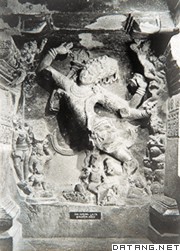
补充资料:埃洛拉石窟寺院
| 埃洛拉石窟寺院 Ellora,Cave Temples at 印度中世纪的石窟和石凿寺院综合建筑。在奥兰伽巴德城西北约25千米处。分属于佛教、印度教和耆那教。
佛教石窟开凿于7~8世纪,主要是僧房窟。这些石窟不仅重视实用性,而且重视装饰性,修建得富丽堂皇。浮雕题材多样化,有观音和弥勒菩萨雕像,还有多罗菩萨、金刚萨埵等早期密教图像。这里的石雕像躯体粗壮,公式化,已受到印度教造像的影响。7~9世纪开凿的印度教石窟占有重要地位。埃洛拉的盖拉萨山在印度教神话中被视为湿婆神居住的神山,16窟的盖拉萨那陀寺是在山崖巨石上雕成的,包括门厅、前殿、主殿、寺塔等各种建筑结构,整个寺院布满华丽的浮雕和壁画,显示了这一时期印度教的兴盛,在世界古代建筑中独具一格。开凿于8~10世纪的耆那教石窟,规模较小。 |
说明:补充资料仅用于学习参考,请勿用于其它任何用途。
参考词条