1) turbellaria
涡虫类
2) eddyworms
涡虫类
3) turbellarians
涡虫类
4) turbellarja
涡虫类
5) turbellarian
涡虫类
6) Dugesia japonica
涡虫
1.
Test on Acute Toxicity of Several Domestic Detergent on Dugesia Japonica;
几种家用洗涤剂对涡虫的急性毒性实验
2.
The single and combined toxicity effects on Paramecium caudatum,Dugesia japonica and Cipangopaludia cathayensis exposed for special period(12,24,48 and 72 h) in different Pb2+ and Cd2+ concentrations were studied by using toxic experiment techniques.
在特定时间(12、24、48、72h)内,研究了Pb2+和Cd2+对草履虫(Paramecium caudatum)、三角涡虫(Dugesia japonica)和中华圆田螺(Cipangopaludia viviparrus)3种水生动物的单一和联合毒性效应。
7) Turbellarian
涡虫
1.
By establishing temperature gradient, studying the regeneration time and survival rate of the turbellarian worm, we can find that 19℃~24℃ is the favourable temperature environment and 22℃ is the best.
通过设置温度梯度 ,观察涡虫切割后再生时间及再生成活率 ,发现 19℃~ 2 4℃为涡虫切割再生的适宜温度范围 ,2 2℃为最适温度 。
2.
The classification and district of turbellarians in freshwater in Northern Shaanxi has been preliminary invertigated.
调查陕北淡水涡虫,不仅对于深入研究陕北地区涡虫的分类区系及其它内容具有重要作用,而且对本地区大、中、小学动物实验也很有益处。
8) turbellarians
涡虫
1.
In the paper,the appearance and histomorphological character of turbellarians in freshwater in northern Shaanxi were observed by paraffin wax slice.
对陕北常见淡水涡虫的外部形态和石蜡切片进行组织形态学观察,经过绘图、照相、分析、鉴定,结果表明陕北淡水涡虫的常见种主要为日本三角涡虫(Dugesia japonica)。
9) planarian
涡虫
1.
Molecular actions guiding neural regeneration in planarian;
涡虫神经再生的分子机制(英文)
10) Planaria
涡虫
1.
To find a normal method for extracting genomic DNA from planaria, the improved CTAB method, SDS method, SDS-Proteinase K method were used to extract genomic DNA from Dugesia japonica.
为了找到一种适用于提取涡虫基因组DNA的常规方法,我们以东亚三角头涡虫为材料,分别用改良的CTAB法、SDS法、SDS-蛋白酶K法对涡虫的基因组DNA进行了制备,并对3种方法制备的涡虫基因组DNA进行了检测与比较。
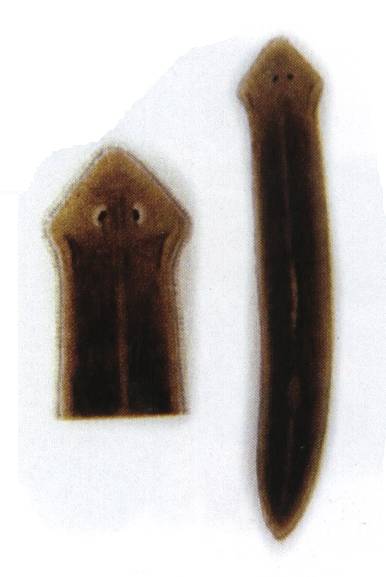
补充资料:日本三角涡虫
(涡虫)
国内分布于香港、台湾、云尚到吉林的广大区域;国外分布在日本、朝鲜等。
小型个体,体长通常为10-15毫米,宽为2-2.5毫米。头部三角形,头的两侧角形成了两耳突。后端逐渐趋窄。眼一对,咽和口在体腹面中部稍后方。生殖孔在口与尾之间。卵巢2个,在卵巢到体后瑞之间具有大量的辜丸。生活时体背面呈黄褐色或棕红色,腹面色浅。 生活于尚北各省区的河流、湖泊、池塘、溪泉及稻田等淡水水域内,喜栖于石头、树叶、朽木及其他物体下面。肉食性,常取食小型动物。不同地区和环境对其生殖具有一定影响,但大多以有性和无性方式交替进行。再生能力极强,如将其身体切为1/279—1/1500段,每段均可恢复成一个新个体。
动物学教学上主要的代表动物,也是生物学研究中常用的理想实验材料。
国内分布于香港、台湾、云尚到吉林的广大区域;国外分布在日本、朝鲜等。
小型个体,体长通常为10-15毫米,宽为2-2.5毫米。头部三角形,头的两侧角形成了两耳突。后端逐渐趋窄。眼一对,咽和口在体腹面中部稍后方。生殖孔在口与尾之间。卵巢2个,在卵巢到体后瑞之间具有大量的辜丸。生活时体背面呈黄褐色或棕红色,腹面色浅。 生活于尚北各省区的河流、湖泊、池塘、溪泉及稻田等淡水水域内,喜栖于石头、树叶、朽木及其他物体下面。肉食性,常取食小型动物。不同地区和环境对其生殖具有一定影响,但大多以有性和无性方式交替进行。再生能力极强,如将其身体切为1/279—1/1500段,每段均可恢复成一个新个体。
动物学教学上主要的代表动物,也是生物学研究中常用的理想实验材料。
说明:补充资料仅用于学习参考,请勿用于其它任何用途。
参考词条