1) Nanjing fine sand
南京细砂
1.
An experimental study on Nanjing fine sand was performed.
结合南京长江四桥工程场地的液化试验结果,分析了相对密度和结构性对南京细砂抗液化强度的影响:重塑南京细砂的抗液化强度与相对密度具有较好的一一对应性,且随着相对密度增大而增大;结构性的存在使南京细砂原状砂样比重塑砂样具有更高的抗液化强度,但随着循环荷载的减小和振动作用次数的增加,两者的抗液化强度逐渐接近;由于结构性的影响,不同相对密度的原状南京细砂的抗液化强度有可能相同。
2) Nanjing city
南京
1.
Management Model of Municipal Solid Waste Towards a Circular Economy and Eco-City Development: A Case Study of Nanjing City;
南京城市生活垃圾资源循环型管理模式研究
2.
Dynamics of urban ecological space evolution and policy responses:a case study of Nanjing City;
城市生态空间演变规律及调控机制——以南京市为例
3.
Prevention and control measures of main turfgrass diseases in Nanjing City;
南京市观赏型草坪草主要病害发生的特点及防治
3) Nanjing
南京
1.
A Method of Dividing Important Eco-function Areas——A Case Study of Nanjing;
重要生态功能区划方法研究——以南京市为例
2.
The Public Appraisal of the Major City Wetlands in Nanjing;
南京市主要城市湿地的公众评价
3.
The flux and pollution character of dust-fall in different functional zones of Nanjing;
南京市不同功能区大气降尘的沉降通量及污染特征
4) Nanjing City
南京市
1.
Protection and utilization of wetlands in Pukou district of Nanjing City;
南京市浦口区湿地保护与开发利用
2.
Characteristics of environmental kuznets curve of industrial wastewater discharge amount in Nanjing city;
南京市工业废水排放的环境库兹涅茨特征研究
3.
Evaluation of Sustainable Development of Urban Ecosystem in Nanjing City;
南京市城市生态系统可持续发展评价研究
5) Nanjing port
南京港
1.
Analysis and Control of the Animal and Plant Diseases Carried by Ships Entering to NanJing Port from Abroad in the Recent Three Years;
南京港近三年进境船舶携带动植物疫病的调查分析及处理
2.
Petrochemical industry is one of the largest pillars of Nanjing city,so to research the Nanjing port petrochemical-transport is of great significance for Nanjing economic development.
港口已成为我国国民经济和区域经济发展的重要战略资源,石化产业是南京的第一大支柱产业,因此研究南京港石化运输对南京经济发展具有十分重要的意义。
6) nanjing metro
南京地铁
1.
Nanjing Metro Company Explores the New Mechanism of Market Operation;
南京地铁探索市场运营新机制
2.
The Platform SINAUT Spectrum of the ATS System of Nanjing Metro;
浅谈南京地铁ATS系统SINAUT Spectrum平台
3.
Technology Innovation of BAS Design of Nanjing Metro;
南京地铁BAS设计的技术创新
参考词条
补充资料:《南京条约》
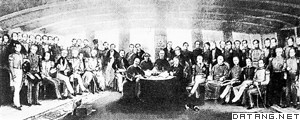
| 《南京条约》 中国清政府与英国政府签订的结束鸦片战争的条约。又称《江宁条约》。1842年8月29日(道光二十二年七月二十四),由清钦差大臣耆英与英国政府全权公使H.璞鼎查在南京签订。条约共13款。主要内容为:①中国割让香港。②向英国赔款2100万银元。③开放广州、福州、厦门、宁波、上海等五处为通商口岸,英国可派驻领事,通称五口通商。④废除“公行”制度,英商可以与中国商人自由进行贸易。⑤中国抽收进出口货的税率由中英共同议定。1843 年7月22日,在香港公布《中英五口通商章程》。10月8日, 耆英与璞鼎查在虎门签订《中英五口通商附粘善后条款》,又称《虎门条约》(《中英五口通商章程》被作为其中的一部分)。在该条约中,英国取得了领事裁判权和片面的最惠国待遇等特权,同时还制订了海关税则。《南京条约》签订后,美国和法国趁火打劫,于1844年分别强迫清政府订立了《望厦条约》和《黄埔条约》。《南京条约》、《虎门条约》与《望厦条约》、《黄埔条约》一起,成为中国近代史上外国侵略者强迫清政府订立的第一批不平等条约。从此,中国由一个封建社会逐步变为半殖民地半封建的社会。
|
说明:补充资料仅用于学习参考,请勿用于其它任何用途。