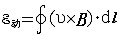
1) photomotive force

光动势
2) photoelectromotive foree
光电动势
3) photo-induced voltage
光生电动势
1.
The photo-induced voltage between the back etching and edge etching silicon were compared, explaining the difference by means of the theory of energy bands.
采用正面无保护的背腐蚀方法分离p-n结,用SEM图观察了背腐蚀后硅片表面形貌的变化,对背腐蚀与刻边分离p-n结样品的光生电动势进行了比较,用能带理论对其差别做了深入的解释。
4) photo electromotive force
光电电动势
6) Optical potential
光学势
1.
The dispersion relation is included into the optical potential.
在光学势中引入色散关系,相比于通常的耦合道光学模型,极大地减少了光学势参数的个数。
2.
The differential cross sections and the spin observables of p- ~ 12 C elastic scattering in the whole intermediate energy region are calculated using the KMT multiple scattering theory with microscopic momentum space optical potential which incorporates the spin dependence of the NN and p- ~ 12 C interactions.
在KMT理论框架下,应用微观的动量空间一级光学势,包括了库仑修正,自旋关联,NN振幅反对称,离壳效应,核子反冲和结合能转换,Lorentz不变的角变换。
3.
From the framework of the multiple scattering theory, we obtain the antiproton-nucleus optical potential that can best describe the experimental elastic scattering data.
从多次散射的理论框架,获得反质子的光学势,这一光学势能很好地描述从轻核至重核在整个能区的弹性散射实验。