1) number of term in series

级数项数
2) numerical series
数项级数
1.
In this paper,Tests on convergence of non-negative functional generalized integral are obtained by the relation between the infinite integral and numerical series.
根据无穷积分与数项级数的关系,得出了关于无穷积分收敛性的几种新的判别法;从而由无穷积分与瑕积分的关系,也可用来判别瑕积分的收敛性问
2.
In this paper,we consider the methods for finding the sum of numerical series and obtain three different methods.
主要给出了数项级数求和的三类不同的方
3.
It is not general to discriminate the convergence and divergence of numerical series with function.
在数项级数敛散性的诸多判别法中,一般不用函数的方法;文中对此做了一些探讨,并且得出一些结果,同时给出了用函数讨论数项级数的方法。
3) series of positive terms
正项级数
1.
Extension of the test of convergence and divergence of series of positive terms;
正项级数敛散性判别法的源与流
2.
Advance on convergence test for series of positive terms;
正项级数审敛法的研究进展
3.
Generalization on convergence criterion for series of positive terms;
关于正项级数收敛性判别的一个推广
4) positive term series
正项级数
1.
A new method about discriminating convergence and divergence of positive term series;
判别正项级数敛散性的一种新方法
2.
By using the density theory of theories of numbers,the article gives the density discrimination method determining the convergence and divergence characteristic of the positive term series.
借鉴数论方法中的密率论 ,给出判别正项级数敛散性的密率判别法 ,此方法特别适用于判定一些较难或不能给出通项表达式的级数的敛散性。
3.
The discrimination of the convergence of positive term series generally is from the comparison principle, and then it compares with certain geometry series and gets the ratio test and the radical test.
对正项级数收敛性的判别,通常是从比较原则出发,进而通过与某一几何级数相比较得比式判别法和根式判别法。
5) series with positive terms
正项级数
1.
New test for convergence of series with positive terms;
正项级数敛散性一种判别方法
2.
The article introduces the convergence test for series with positive terms.
针对正项级数的敛散性判定,将进一步推广Cauchy审敛法。
补充资料:级数
| 级数 series 将数列un的项 u1,u2,…,un,…依次用加号连接起来的函数。数项级数的简称。如:u1+u2+…+un+…,简写为  un称为级数的通项,记 un称为级数的通项,记 称之为级数的部分和。如果当m→∞时 ,数列Sm有极限S,则说级数收敛,并以S为其和,记为 称之为级数的部分和。如果当m→∞时 ,数列Sm有极限S,则说级数收敛,并以S为其和,记为 否则就说级数发散。级数是研究函数的一个重要工具,在理论上和实际应用中都处于重要地位,这是因为:一方面能借助级数表示许多常用的非初等函数, 微分方程的解就常用级数表示;另一方面又可将函数表为级数,从而借助级数去研究函数,例如用幂级数研究非初等函数,以及进行近似计算等。级数的收敛问题是级数理论的基本问题。从级数的收敛概念可知,级数的敛散性是借助于其部分和数列Sm的敛散性来定义的。因此可从数列收敛的柯西准则得出级数收敛的柯西准则 : 否则就说级数发散。级数是研究函数的一个重要工具,在理论上和实际应用中都处于重要地位,这是因为:一方面能借助级数表示许多常用的非初等函数, 微分方程的解就常用级数表示;另一方面又可将函数表为级数,从而借助级数去研究函数,例如用幂级数研究非初等函数,以及进行近似计算等。级数的收敛问题是级数理论的基本问题。从级数的收敛概念可知,级数的敛散性是借助于其部分和数列Sm的敛散性来定义的。因此可从数列收敛的柯西准则得出级数收敛的柯西准则 : 收敛 收敛 任意给定正数ε,必有自然数N,当n>N时 ,对一切自然数 p,有|un+1+un+2+…+un+p|<ε,即充分靠后的任意一段和的绝对值可任意小。 任意给定正数ε,必有自然数N,当n>N时 ,对一切自然数 p,有|un+1+un+2+…+un+p|<ε,即充分靠后的任意一段和的绝对值可任意小。如果每一un≥0(或un≤0),则称  为正(或负)项级数,正项级数与负项级数统称为同号级数。正项级数收敛的充要条件是其部分和序列Sm 有上界,例如 为正(或负)项级数,正项级数与负项级数统称为同号级数。正项级数收敛的充要条件是其部分和序列Sm 有上界,例如  收敛,因 为 收敛,因 为  有无穷多项为正,无穷多项为负的级数称为变号级数,其中最简单的是形如 有无穷多项为正,无穷多项为负的级数称为变号级数,其中最简单的是形如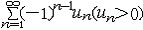 的级数,称之为交错级数。判别这类级数收敛的基本方法是莱布尼兹判别法 :若un ≥un+1 ,对每一n∈N成立,并且 的级数,称之为交错级数。判别这类级数收敛的基本方法是莱布尼兹判别法 :若un ≥un+1 ,对每一n∈N成立,并且  ,则交错级数收敛。例如 ,则交错级数收敛。例如 收敛。对于一般的变号级数如果有 收敛。对于一般的变号级数如果有 收敛,则称变号级数绝对收敛。如果只有 收敛,则称变号级数绝对收敛。如果只有 收敛,但是 收敛,但是 发散,则称变号级数条件收敛。例如 发散,则称变号级数条件收敛。例如 绝对收敛,而 绝对收敛,而 只是条件收敛。 只是条件收敛。 如果级数的每一项依赖于变量 x,x 在某区间I内变化,即un=un(x),x∈I,则称  为函数项级数,简称函数级数。若x=x0使数项级数 为函数项级数,简称函数级数。若x=x0使数项级数 收敛,就称x0为收敛点,由收敛点组成的集合称为收敛域,若对每一x∈I,级数 收敛,就称x0为收敛点,由收敛点组成的集合称为收敛域,若对每一x∈I,级数 都收敛,就称I为收敛区间。显然,函数级数在其收敛域内定义了一个函数,称之为和函数S(x),即 都收敛,就称I为收敛区间。显然,函数级数在其收敛域内定义了一个函数,称之为和函数S(x),即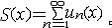 如果满足更强的条件, 如果满足更强的条件, 在收敛域内一致收敛于S(x)。 在收敛域内一致收敛于S(x)。一类重要的函数级数是形如  的级数,称之为幂级数 。它的结构简单 ,收敛域是一个以 的级数,称之为幂级数 。它的结构简单 ,收敛域是一个以 为中心的区间(不一定包括端点),并且在一定范围内具有类似多项式的性质,在收敛区间内能进行逐项微分和逐项积分等运算。例如幂级数 为中心的区间(不一定包括端点),并且在一定范围内具有类似多项式的性质,在收敛区间内能进行逐项微分和逐项积分等运算。例如幂级数 的收敛区间是 的收敛区间是 ,幂级数 ,幂级数 的收敛区间是[1,3],而幂级数 的收敛区间是[1,3],而幂级数 在实数轴上收敛。 在实数轴上收敛。 |
说明:补充资料仅用于学习参考,请勿用于其它任何用途。
参考词条