1) access to elevators
电梯通道
2) hoistway
电梯通道
3) hoistway door
电梯通道门
4) hoistway entrance
电梯通道进口
5) elevator
电梯
1.
Monitoring contamination condition and disinfection efficacy of air and operation buttons of medical elevators;
医用电梯内空气和操作按钮的污染情况及消毒效果监测
2.
The development of elevator automatic newspaper level equipment;
电梯自动报层装置的研制
3.
The application of suppliers involvement in product innovation theory in the development of the elevator;
供应商介入产品创新理论在电梯开发中的应用
6) Elevators
电梯
1.
Control of multi-layered elevators based on panasonic PLC network;
基于松下PLC网络的多层电梯控制
2.
Based on the performance characteristics of elevators,this paper realizes automatic supervision of four layer elevator by use of Siemens S7-200 series PLC and WinCC configuration software.
针对电梯的运行特点,采用西门子S7-200系列PLC和WinCC监控软件相结合的控制模式实现了4层电梯的全自动监视与控制。
7) lift
电梯
1.
System of remote monitoring and data access for lifts with LPC2104;
基于LPC2104的电梯远程监控及数据访问系统
2.
Collective selective control of lift with serial communication of ADP and single chip;
ADP模块与单片机串行通信实现电梯的集选控制
8) ELEV;elevator
电梯
9) moving staircase
电梯
10) ELVR (Elevator)
电梯
补充资料:电梯
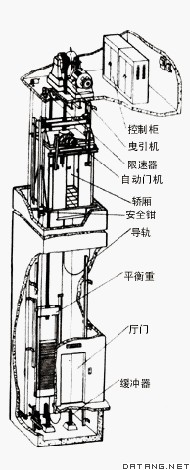
| 电梯 elevator 沿固定导轨自一个高度运行至另一个高度的升降机。按额定速度又可分为低速电梯( 1米/ 秒以下)、快速电梯(1~2米/秒)和高速电梯(2米/秒以上)3种。19世纪中期开始采用液压电梯,今仍在低层建筑物上应用。1852年,美国的E.G.奥蒂斯研制出钢丝绳提升的安全升降机。80 年代,驱动装置有进一步改进,如电动机通过蜗杆传动带动缠绕卷筒、采用平衡重等。19世纪末,采用了摩擦轮传动,大大增加了电梯的提升高度。现代电梯主要由曳引机(绞车)、导轨、对重装置、安全装置(如限速器、安全钳和缓冲器等)、信号操纵系统、轿厢与厅门等组成。这些部分分别安装在建筑物的井道和机房中。通常采用钢丝绳摩擦传动,钢丝绳绕过曳引轮,两端分别连接轿厢和平衡重,电动机驱动曳引轮使轿厢升降。电梯要求安全可靠、输送效率高、平层准确和乘坐舒适等。电梯的基本参数主要有额定载重量、可乘人数、额定速度、轿厢外廓尺寸和井道型式等。
|
说明:补充资料仅用于学习参考,请勿用于其它任何用途。
参考词条