1) bastose
['bæstəus]

红麻纤维
1.
Syntheses of bastose containing benzoin oxime group and its adsorption properties on nickel(Ⅱ);
安息香肟基红麻纤维的制备及其对Ni~(2+)的吸附性研究
2.
Studies on syntheses of bastose containing thiourea radical and their adsorption properties for Ni~(2+)、Cr~(3+)、Mn~(2+);
硫脲基红麻纤维的制备及其对Ni~(2+)、Cr~(3+)、Mn~(2+)的吸附性
3.
Studies on the syntheses of bastose containing thiosemicarbazide radical and their adsorption properties to Ni~(2+)、Cr~(3+) 、Mn~(2+);
硫氨脲基红麻纤维的制备及其对Ni~(2+)、Cr~(3+)、Mn~(2+)的吸附性研究
2) jute fiber
黄麻纤维
1.
Study on high temperature degumming of jute fiber;
黄麻纤维高温脱胶工艺初探
2.
Study on the pretreatments of jute fiber;
黄麻纤维预处理工艺研究
3) hemp fiber
大麻纤维
1.
Analysis of hemp fiber degumming with living enzymes;
大麻纤维生物酶脱胶工艺分析
2.
Bacteria resistant property of hemp fiber and its anti-bacterial mechanism;
大麻纤维的抗菌性及抗菌机制
3.
Application of pectinase in hemp fiber degumming;
果胶酶在大麻纤维脱胶中的应用
4) bast fiber
麻纤维
1.
Research and development of bast fiber-reinforced composites;
麻纤维增强复合材料的研究进展
2.
Coolness-comfort and sanitary-health properties of bast fiber;
麻纤维的凉爽舒适及卫生保健性能
3.
Selective Oxidation of Bast Fiber and Its Modification with Silk Fibroin;
麻纤维的选择性氧化及丝素蛋白的改性研究
5) flax fabric
亚麻纤维
1.
The dyeability of flax fabric improved by swelling agent;
膨胀剂对亚麻纤维轧染染色性能的改进
2.
The dyeability of flax fabric improved by urea;
尿素对亚麻纤维轧染染色性能的改进
3.
The modification to flax fabric with urea at high temperature was carried out inorder to improve the dyeability of flax fabric for padding.
通过高温条件下尿素对亚麻纤维进行改性,提高了其轧染时的染色性能和染色深度。
6) bast fiber
麻类纤维
1.
Nonwoven manufacturing technology combined with finishing technics such as specific impregnation were used to investigate effects of web-forming,consolidation method and water-repellent finishing etc on environmental friendly bast fiber mulch film,and bast fiber such as ramie and jute were major material for trial manufacture.
将非织造布制造工艺与特有的浸渍等后整理工艺相结合,以苎麻、黄麻等麻类纤维为主要试制原料,研究成网方法、固结方法、拒水整理等对环保型麻地膜的影响。
补充资料:红麻
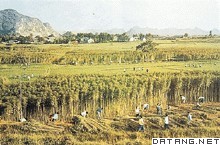
| 红麻 Hibiscus cannabinus 锦葵科木槿属一年生草本韧皮纤维作物。又称洋麻、槿麻、钟麻。起源有原产印度或热带非洲两种看法。以中国、泰国、印度、前苏联种植较多,次为孟加拉、越南、古巴、巴西、印度尼西亚和伊朗。中国于1928年引种,50年代因炭疽病害而停种,60年代由于推广抗病品种,生产得以恢复发展。广东、广西、浙江、河南、山东、安徽、江苏、湖南、湖北、江西、四川等省、自治区均有种植。 红麻茎直立,高3~5米,粗1.5~2.0厘米,呈绿、紫、红或浅红色。叶分掌状裂叶型和阔卵叶型。花淡黄或乳白色,花柱5裂,柱头紫或红色。蒴果,种子呈肾形。红麻依据叶形、茎色、成熟期分类。印度分5个变种、8个类型;中国分为13个类型。日本根据品种对光、温的反应,分为感光型和感温型。 红麻是短日照喜温作物。要求生育适温25℃,无霜期150天以上,生育期降水500毫米左右。适于土层深厚的沙壤土。幼苗期怕涝,成株后抗涝力强,是涝洼地区的稳产作物。生长期日照时数延长,有利营养生长;缩短光照可促进生殖生长。故可在低纬度地区繁殖晚熟良种种子,高纬度地区种植收麻。合理密植可增加初生纤维比重,提高品质。麻株在开花并结少量蒴果时达到工艺成熟,即可收获。随即整株或剥皮沤洗。红麻主要有炭疽病、根结线虫病和小地老虎、蚜虫、小造桥虫等病虫害。
红麻纤维银白色,有光泽,吸湿散水快。适于织麻袋、麻布、麻地毯和绳索。带皮麻秆可作造纸原料,剥皮后的麻骨用于烧制活性炭和制纤维板。叶可作牲畜饲料。 |
说明:补充资料仅用于学习参考,请勿用于其它任何用途。
参考词条