1) Gonghe basin

共和盆地
1.
Ecological restoration in alpine sandy lands of Gonghe basin,Qinghai province;
青海共和盆地沙化土地生态修复效果的研究
2.
Virtual Water Consumption and Desertification Controlling in the Gonghe Basin, Qinghai Province;
青海共和盆地虚拟水消费及其在荒漠化防治中的应用
3.
Quantitative research on factors of soil desertification in Gonghe basin;
共和盆地土地沙漠化因素定量研究
2) Gong-he Basin
共和盆地
1.
Temporal - Spatial Analysis of Water and Cause of Desertification in Gong-he Basin in Qinghai Province;
青海共和盆地水分的时空变化及其荒漠化成因分析
2.
Changes of above-ground biomass,species population and biotope in grazed and ungrazed grassland in Qinghai Gong-he Basin;
青海共和盆地封育季节草场生物量、种群与生境变化
4) Helong Basin
和龙盆地
1.
Deposition of Changcai Group of Helong Basin,Yanji,Jilin Province and its concentrating coal characteristics;
延吉和龙盆地长财组沉积与聚煤特征
5) Minhe basin
民和盆地
1.
Understandings of the continental sequence stratigraphy——An example from 1∶50000 regional survey of Minhe basin,Gansu Province;
对陆相层序地层的一些认识——以甘肃民和盆地1∶5万区域地质调查为例
2.
Porosity development in the hydrocarbon reservoirs of the Bazhou depression,Minhe Basin;
民和盆地巴州坳陷储集层的孔隙发育特征
3.
Oil & gas filling and injection history and oil & gas bearing system: a case study of tight sandstone oil reservoir in Minhe basin;
民和盆地致密砂岩油藏油气充注史及含油气系统研究
6) Minghe Basin
民和盆地
1.
In order to forecast the oil-gas exploration potential of Minghe Basin, the geochemistry characteristics of natural gas in the basin are studied and it is found out that the natural gas mainly consists of coalbed methane and CO_2.
对民和盆地天然气地球化学特征进行研究,发现其天然气主要为煤层甲烷气和二氧化碳气,分析气源岩地球化学与天然气碳、氢、氧同位素,认为气源岩主要为中侏罗统窑街组的暗色泥岩、油页岩、藻煤、腐殖煤和炭质泥岩,其中暗色泥岩、油页岩、藻煤为Ⅰ—Ⅱ型干酪根,有机质丰度高;盆地煤层甲烷气为有机成因气,具有油型与煤型混合气特征,以油型气为主;煤层高浓度二氧化碳气不是有机成因气,也不是岩石化学热解无机成因气,而可能是与F19断裂带有关的深部无机成因气。
2.
Poor reservoir property is the main constrained factor for oil and gas exploration to obtain a significant breakthrough in Minghe basin.
储层物性差是制约民和盆地油气勘探获得重大突破的关键。
补充资料:法国共和历
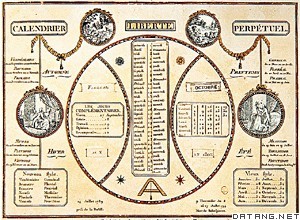
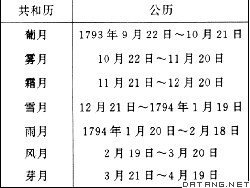
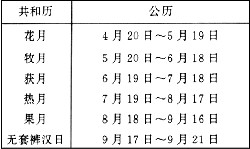
| 法国共和历 French republican calendar 法国大革命中一度实行的历法。1793年10月5日国民公会决定废止基督教的格里历法(即公历),采用革命历法,即共和历(见表) 。共和历以法兰西第一共和国建立之日(1792年9月22日)为历元,每年分4季,12个月,每月30天,每10天为1旬,每旬第10日为休息日。12个月之外余下的5天(闰年为6天,包括1796 、1800、1804)作为无套裤汉日。共和历借用当时一本小册子的富有诗意的名称,将12个月依次定为葡月、雾月、霜月、雪月、雨月、风月、芽月、花月、牧月、获月(或收月)、热月、果月。附在格里历日期上的圣徒名字则用种子、树木、花和水果的名字加以替换。该历法自1793年11月26日开始采用。法国大革命中发生的热月政变、芽月起义、牧月起义、葡月暴动、果月政变、月政变、雾月政变等事件以及牧月法令、风月法令等等,就是按共和历的月份命名的。1806年元旦开始,拿破仑政权恢复格里历法,正式废止了共和历。
|
说明:补充资料仅用于学习参考,请勿用于其它任何用途。
参考词条